


Evil Minds: Dirty Charades!
4.8787.00 Reviews
App Specs
- Version
- 1.5.9
- Updated On
- License
- Free
- Downloads
- 500,000+
- Developer
- Super Massive Ventures Inc.
- Categories
- Word
- Platform
- Android
Screenshots
 Analysis by AppCompare
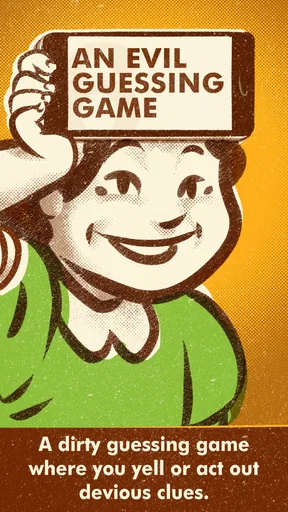
I approached Evil Minds: Dirty Charades! expecting a quick party word game, but its real appeal is more specific: it turns familiar charades into an adults-only activity where the humor depends as much on the group as on the prompt. The basic idea is easy to understand, yet the mature tone changes who can comfortably play it and where it belongs. I would not treat it as a general family game or a quiet solo distraction. It makes more sense when several friends are already together and want something that gets people talking, acting, and laughing without a long setup.
This is a free word game from Super Massive Ventures Inc., presented as a dirty take on charades by Evil Studios Limited. It has an average rating of 4.8 from around 4.6 thousand ratings, and its audience is clearly large enough to make it a familiar choice in this narrow party-game space, with over 500 thousand installs. Those figures suggest strong interest, but they do not remove the central question: will your particular group enjoy the mature prompts? In my experience, that matters more here than technical polish or the size of the download audience.
How the game feels when a group starts playing
The strongest part of the experience is the low barrier to entry. Charades already has rules most people understand, so players can focus on performing rather than learning a complicated interface. That makes it useful when a gathering has reached the awkward “what should we do now?” stage. One person can bring out the phone, another can act, and the rest of the room can participate almost immediately.
The mature angle is not a minor decoration. It sets the mood from the first round and limits the kinds of groups for which the game feels appropriate. The content rating is Mature 17+, so I would keep it away from children, mixed-age family events, classrooms, workplaces, and any party where everyone has not agreed to that kind of humor. Even among adults, comfort levels vary. A prompt that makes one group laugh can make another group stop playing, so the person hosting should be willing to skip anything that crosses a personal boundary.
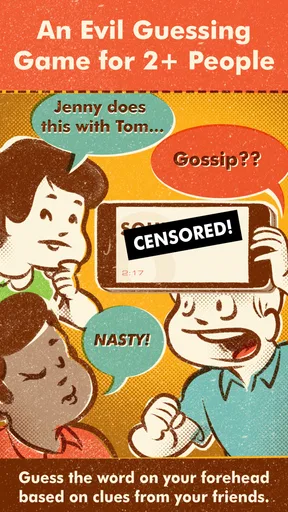
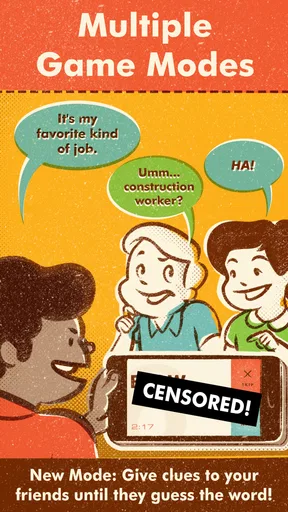
That is also why I see this as a social tool rather than a conventional word puzzle. In a normal word game, the challenge usually comes from vocabulary, spelling, or deduction. Here, the entertainment comes from translating a prompt into gestures while other people interpret those gestures under pressure. The phone supplies the starting point, but the room supplies the actual energy.
Speed expectations during ordinary play
For short sessions, the game feels best when the phone is treated as a prompt source rather than the center of attention. You do not need to stare at a screen for every turn, and that helps the game compete with paper charades or someone inventing prompts on the spot. The practical advantage is convenience: the group does not need to prepare a stack of cards or appoint one person to write ideas down.
I would still avoid expecting a deep progression system or a rich solo experience from this format. Its speed comes from simplicity, not from a large amount of strategic depth. If your group wants a game that rewards planning over several rounds, this will probably feel lightweight. If you want something that can fill a gap between dinner and another activity, that lightness is exactly the point.
Worth Reading Before You Choose

EA SPORTS FC Mobile 26 Is a Bigger Football Game, but It Takes Time

Flipboard Shows What News Apps Must Do Beyond the Feed

Switching to Android Auto Means Rethinking Your Driving Routine

Google Calendar Makes a Crowded Week Easier to Manage

Ludo King Makes the Most of the Minutes Between Plans

Baby Panda World Brings Quick Play to Modern Phones, but Its Game Library Feels Busy
A useful way to keep the pace comfortable is to decide before starting how the group will handle a prompt that nobody wants to act out. Agreeing on a quick pass rule prevents an uncomfortable debate from becoming the longest part of a round. It also makes the mature theme easier to manage because players know they are not trapped by a single suggestion.
What happens when the game gets heavy use
The demanding moment is not an individual turn; it is a long gathering where many people repeatedly pass the phone around. That kind of use exposes practical friction that may not matter in a five-minute test. The device becomes part of the social traffic, and players may be more focused on laughing and moving around than on handling it carefully. I recommend giving one person responsibility for holding the phone and showing the next prompt, rather than letting it circulate constantly.
This small change improves the rhythm. The performer can concentrate on acting, the guessers can watch the room, and the host can control when the next turn begins. It also helps avoid the common party-game problem where several people tap the screen at once or accidentally reveal information before the round starts. The game itself may be simple, but a little organization makes the experience feel much smoother.
Long sessions can also reveal a content issue: the same style of joke does not remain equally funny for every group. If the room starts reacting more to the awkwardness than to the performance, I would stop rather than force another round. This is a title that benefits from ending while people are still enjoying it. It works well as a short activity between other plans, but it may lose its impact if treated as the only entertainment for an entire evening.
Another practical tip is to establish the audience before opening it. If someone joins late, explain the mature premise rather than handing over the phone without context. That simple courtesy matters more here than in an ordinary guessing game, because the age rating is part of the product’s identity, not a footnote.
Reliability and recovering from interruptions
For a party game, reliability means more than whether the app opens. It means whether a brief interruption ruins the social flow. A call, notification, low battery warning, or someone switching away from the game can break the moment, especially when the group is already waiting for the next prompt. I therefore prefer to start a session after reducing avoidable distractions and assigning a host who can restore the game if attention shifts elsewhere.
I would not build an evening around any mobile game without a backup plan, and that is especially true for a title whose main strength is spontaneous group play. Keeping a few improvised charades ideas in reserve costs nothing and prevents a technical pause from ending the activity. This is not a criticism unique to this game; it is simply good planning when a phone is replacing a physical deck of cards.
The recovery experience also depends on how carefully players handle the turn. If the phone leaves the active screen, the group may need a moment to work out whose turn it was and what the current prompt should be. A host can reduce that confusion by announcing the performer before each round and keeping the device in one place. That workflow is more dependable than relying on everyone to remember the state of play after a distraction.
Because the current version is 1.5.9, I would keep the app reasonably current on a compatible device rather than assuming an old installation will behave identically forever. The minimum operating-system requirement is Android 5.0, which makes it accessible to a broad range of Android hardware. That does not guarantee identical behavior on every phone, but it does make the game a plausible option for groups using older spare devices at a gathering.
Device limits, battery, and comfort
This is not the kind of game I would choose to stress-test a phone. The concept is built around reading prompts and sharing a screen, so its value does not depend on advanced graphics or a powerful processor. That should make it a sensible candidate for modest Android hardware, particularly when the phone is being used for a short social session rather than a long, graphics-heavy game.
Still, an older device can create its own problems. A small screen may be harder for a group to read, and a dim display can turn a simple prompt into a round of people leaning over one another. If possible, use a phone with a comfortable brightness level and place it where the performer can see it without exposing it to the guessers. This is a surprisingly important distinction: the game is easy to understand, but poor screen positioning can make the room feel disorganized.
Battery planning is also sensible. A short session should not be a major burden, but a phone used for music, messages, photos, and the game at the same time has more opportunities to run low. I would not depend on a nearly empty device as the only source of entertainment. A charger nearby or a second activity ready to go is enough to remove that worry.
The free entry point helps when you are testing the game with a new group. You can find out whether the tone suits everyone before spending anything. In-app purchases range from $0.99 to $4.99 per item, so I would let the host decide whether any optional purchase is worthwhile instead of treating it as necessary for the first session. The important trade-off is psychological as much as financial: a party game should not make guests feel pressured to unlock more content simply to keep the evening moving.
Where it beats ordinary alternatives
Compared with making up charades prompts yourself, this game offers convenience and removes the burden of one person having to invent ideas continuously. That is its clearest everyday advantage. Imagine four friends finishing a meal at home: nobody has prepared cards, one person wants a quick activity, and the group has enough familiarity to appreciate adult humor. Opening the game gives them a ready-made starting point without requiring a long explanation.
Compared with a standard word puzzle, it is more active and more dependent on group chemistry. A crossword or word-guessing app is better when you want quiet concentration, individual progress, or a game that can be played discreetly on a commute. This title is better when the phone can be passed around and the laughter of a bad performance is part of the reward.
Compared with family-friendly charades, the mature content is both its identity and its limitation. Adults looking for deliberately risqué party prompts may find ordinary alternatives too tame. On the other hand, anyone planning a mixed-age event should choose a safer charades app or a physical game with clearly suitable content. The right choice is not about which product is universally better; it is about whether the room wants this specific tone.
It also differs from a competitive multiplayer game that gives every player a visible score or a carefully balanced challenge. The fun here is less about proving who is best and more about creating memorable performances. If your friends become overly concerned with winning, the simple format may feel thin. If they enjoy theatrical embarrassment and quick jokes, the lack of complexity works in its favor.
Who should try it, and who should skip it
I would recommend it to adults who already enjoy charades, improvised comedy, and games that depend on conversation. It is particularly suitable for a casual home gathering, a relaxed evening with close friends, or a small party where everyone understands the mature premise. It can also work as a warm-up before a longer board-game session because the rules are familiar and the turns are easy to explain.
I would skip it for children, family reunions with different age groups, professional events, and groups that prefer clean humor. I would also avoid recommending it to someone seeking a substantial solo word game. The category label may suggest vocabulary practice, but the experience is fundamentally social and performative. A person looking for daily mental exercise, long-term progression, or calm individual play will likely be happier with a conventional word puzzle.
There is a further social trade-off worth mentioning. Even among friends, not everyone enjoys being put on the spot. A considerate host should let people watch, pass, or join only when they feel comfortable. That flexibility does not weaken the game; it protects the atmosphere that makes the game work. The best sessions feel voluntary rather than like a test of how far someone is willing to go for a laugh.
My performance verdict after using it as a party game
My overall impression is that the game’s performance is best judged by how quickly it gets out of the way. It does not need to dominate the screen or demand technical attention. Its job is to provide a prompt, support a turn, and let the people in the room create the entertainment. For that purpose, the lightweight design is a strength, especially on older Android devices that meet the Android 5.0 requirement.
The limitations are equally clear. The mature premise narrows the audience, the entertainment depends heavily on the group, and long sessions may feel repetitive if nobody brings extra energy to the acting. The game is also less useful when the phone cannot be comfortably shared or when interruptions are likely. These are not reasons to reject it outright, but they are reasons to choose the setting carefully.
After considering the free price, the Mature 17+ positioning, the current version, and the optional purchases, I see it as a low-risk experiment for the right adult group. I would install it before a casual gathering, explain the tone in advance, and let the host control the rounds. I would not present it as a universal party recommendation or as a replacement for a deeper word game.
My honest recommendation is simple: choose it when the people matter more than the mechanics and everyone is comfortable with deliberately dirty humor. In that situation, it can turn a quiet gap in an evening into a lively round of performances. If you need clean content, solo depth, or a carefully structured competitive experience, another word-game alternative will serve you better.
Pros
- Large library of adult-themed prompts for varied party sessions.
- Simple rules make it easy for new players to join quickly.
- Works well for groups looking for cheeky
- humorous entertainment.
- Charades encourage active participation instead of passive screen time.
- Suitable for casual gatherings
- parties
- and adult game nights.
Cons
- Mature content makes it unsuitable for children or family gatherings.
- Some prompts may feel awkward or offensive depending on the group.
- Replay value can drop once players remember frequently used prompts.
- Requires a comfortable
- open-minded group to be enjoyable.
- May not appeal to players who prefer strategic or competitive games.
FAQs for Evil Minds: Dirty Charades!
What is Evil Minds: Dirty Charades!?
Evil Minds: Dirty Charades! is an adults-only party game based on charades and guessing prompts. Players take turns acting, describing, or guessing provocative and humorous words while the rest of the group tries to identify the answer. Its intentionally risqué content makes it better suited to private gatherings with friends than family events or mixed-age parties.
How do you play Evil Minds: Dirty Charades!?
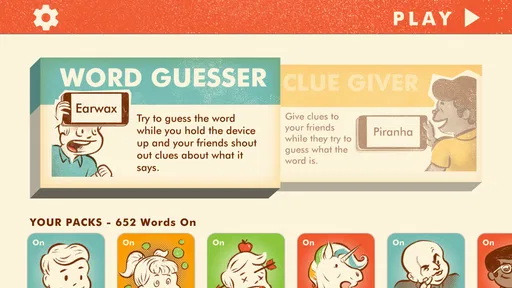
To play, choose a category or prompt, divide everyone into teams if desired, and decide which player will perform during each turn. That player uses gestures or explanations according to the selected rules, while teammates attempt to guess before time runs out. The game is designed for social interaction, so the experience is more entertaining with several people rather than alone.
Is Evil Minds: Dirty Charades! appropriate for children?
No. Evil Minds: Dirty Charades! is intended for adults because many of its prompts involve sexual humor, suggestive situations, profanity, or mature themes. Parents should not treat it as a general family charades game, and the app should be kept away from children. It is best used only among consenting adults who are comfortable with its style of humor.
Does Evil Minds: Dirty Charades! require an internet connection?
The core party-game experience is generally designed to be played locally with people in the same room, rather than as a competitive online multiplayer title. However, availability of prompts, advertisements, updates, or certain app functions can depend on the version installed and the device’s connection. Check the store listing and permissions on your platform before downloading.
Is Evil Minds: Dirty Charades! free to download, and does it contain ads or purchases?
The app may be offered as a free download, but the exact pricing model can vary between Android and iOS and may change with updates. Free versions can include advertising, optional purchases, or additional content that is not available immediately. Before installing, review the current store page for the listed price, in-app purchase details, advertising information, and refund policies.


